


Nowadays, LED stage lighting has long replaced traditional halogen and xenon lamps, becoming the mainstream equipment for various scenarios such as performances, weddings, cultural tourism, and bars. From small commercial performances to large-scale concerts, LED lighting is indispensable. Many people are aware of its advantages, but they may not understand the core technological logic. Today, we will deeply dissect and reveal the reasons why LED lighting dominates the stage lighting industry.
1. Core lighting principle of LED stage lighting
LED, or light-emitting diode, is a solid-state semiconductor device that directly converts electrical energy into visible light, which is the most fundamental difference between it and traditional lighting fixtures.
Traditional stage lighting relies on filament heating and gas discharge to emit light, with most of the energy being lost as heat and only a small amount being converted into light energy. In contrast, LED lighting relies on the electroluminescence effect of semiconductor PN junctions. When current passes through the semiconductor chip, electrons and holes recombine, directly releasing light energy with almost no heat loss, resulting in extremely high photoelectric conversion efficiency.
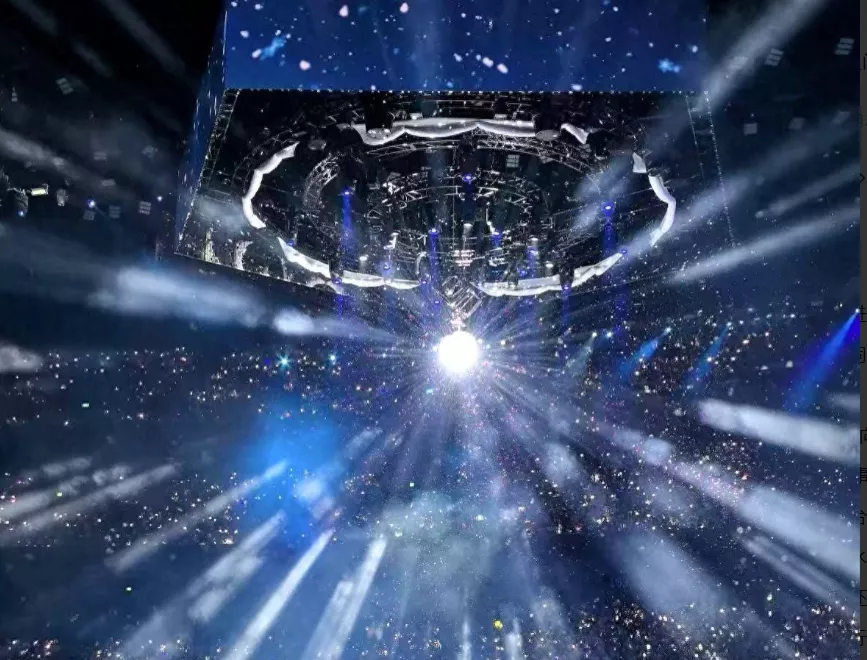
When applied in stage settings, LED luminaires equipped with RGB tri-primary color chips, coupled with professional drivers and dimming systems, can achieve millions of color mixing, precise brightness adjustment, and dynamic strobe switching. When paired with optical accessories, it can easily achieve various lighting effects such as beam, dyeing, and wall washing, meeting various stage lighting and shadow requirements.
II. Core Advantages of LED Lighting Becoming Mainstream
1. Energy saving and consumption reduction, with significant cost advantages
The photoelectric conversion efficiency of LED lighting exceeds 80%, far surpassing the 10%-20% of traditional lighting fixtures. At the same brightness level, its power consumption is only 1/5-1/10 of traditional lighting fixtures, significantly reducing electricity expenses for performances and venue operations. The cost advantage is particularly prominent for long-term use.
2. With an exceptionally long lifespan, maintenance costs are reduced
Traditional stage bulbs have a lifespan of only 500-2000 hours, requiring frequent replacement, which incurs high costs in consumables and labor. LED bulbs, on the other hand, can last for 50,000-100,000 hours, and under normal use, the light source does not need to be replaced for several years, greatly reducing equipment maintenance and downtime losses.
3. The lighting and shadow effects are ultimate, with strong color expression
Equipped with an RGB tri-color chip, it offers infinite adjustment of 16.7 million colors, boasting high color saturation and smooth transitions, accurately matching stage atmosphere and mood. Whether it's the warm and soft lighting of a wedding or the dynamic and explosive lighting of a concert, it can perfectly present the effects, far surpassing traditional lighting fixtures.
4. Quick response, with dynamic effects at full capacity
LED beads illuminate upon being powered on, with a response speed reaching nanosecond level. They can achieve dynamic effects such as high-speed strobe, smooth gradient, and rhythmic jump, perfectly fitting the rhythm of stage music and creating a strong visual impact, which cannot be achieved by traditional lighting fixtures.
5. Safe and environmentally friendly, with a wider range of applicable scenarios
LED lighting fixtures generate minimal heat during operation, eliminating the risks of burns and fire hazards. They are highly resistant to vibration and impact, making them suitable for complex settings such as outdoor performances and mobile commercial shows. Additionally, they emit no ultraviolet or infrared radiation, thus avoiding damage to actors and props. Furthermore, they are environmentally friendly, containing no harmful substances, and align with industry development trends.
III. Technical Pain Points and Development Trends in the Industry
Currently, low-end LED lighting fixtures in the industry suffer from issues such as color distortion, brightness decay, and poor heat dissipation. Outdoor lighting fixtures need to be waterproof and anti-aging, and the operational threshold for high-end equipment also needs to be optimized.
Currently, industry brands are continuously upgrading their technologies, utilizing high-quality LED chips, optimizing cooling systems, and simplifying control logic to enhance the stability and usability of lighting fixtures. In the future, as LED technology integrates with intelligent control and AI interaction, stage lighting will become more intelligent and creative, solidifying LED's mainstream status.
For lighting engineers and buyers, mastering LED lighting technology and opting for superior LED equipment are inevitable choices to align with the development of the industry. LED lighting will continue to lead the innovation and development of the stage lighting and visual effects industry.